OVERVIEW

Rocket Analytics is an internal AI platform for Rocket Mortgage bankers and executives built for lead analytics, team metrics, and data visualizations. Users can query their data conversationally, customize AI agents to automate recurring analyses, and share insights across teams all without being analytic experts.
My Role
Product Designer
Project Type
Enterprise AI / Internal Tooling
Timeline
3 months
0
Daily active users
0
Versions ready to deploy for 2026
100
Designers before me
HUMBLE BEGINNINGS
What is the reality for these users?
Imagine you're a banker at Rocket Mortgage. It's Monday morning and you need to pull last week's lead data before your team standup. Someone told you Rocket Analytics can do this — it's supposed to work like ChatGPT, just ask it what you need.
You open it. You're immediately met with a search bar on the landing page. You type your question in. Nothing happens the way you expected — because that wasn't a chat input. That was a search bar for filtering AI agents, a feature most users didn't know existed and couldn't distinguish from the place you're supposed to start talking.
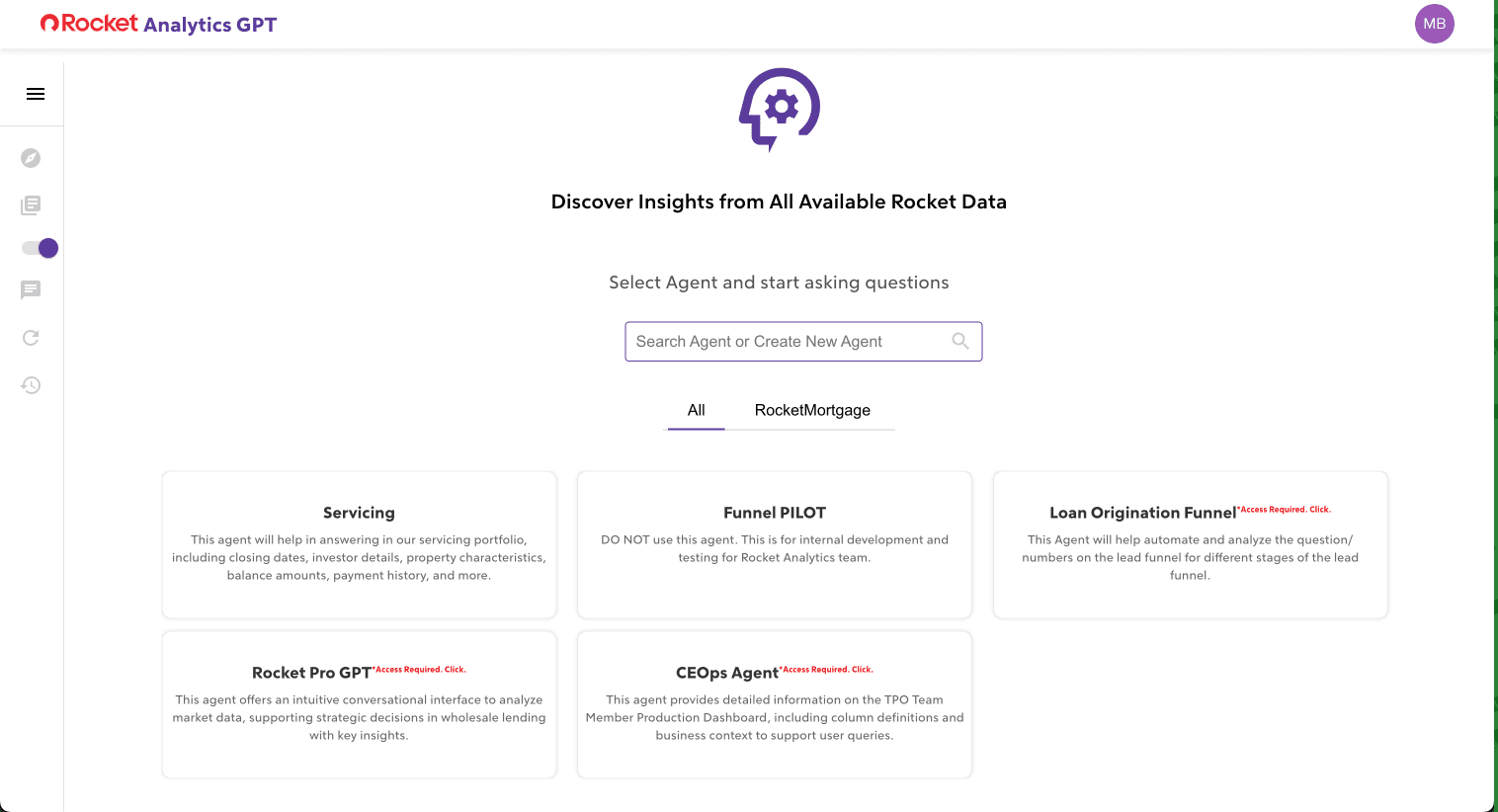
INITIAL LANDING PAGE
Unclear input field
Where do you even begin to chat? What do I do from the get-go?
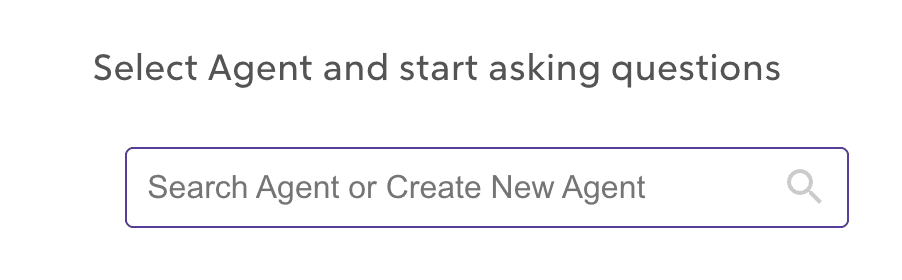
INITIAL SEARCH
Confusing navigation
Changing an agent mid-conversation makes you start a new one.
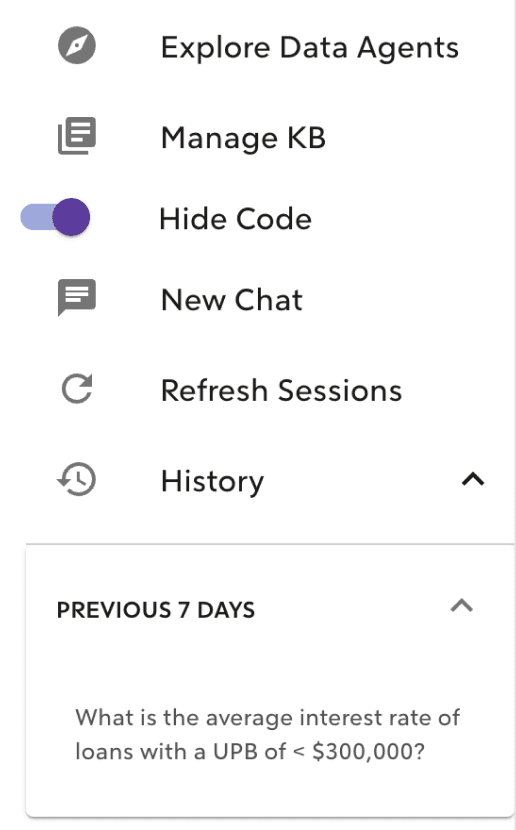
INITIAL NAV BAR
Visual inconsistency
Loss of trust from enterprise users due to almost no visual familiarity.
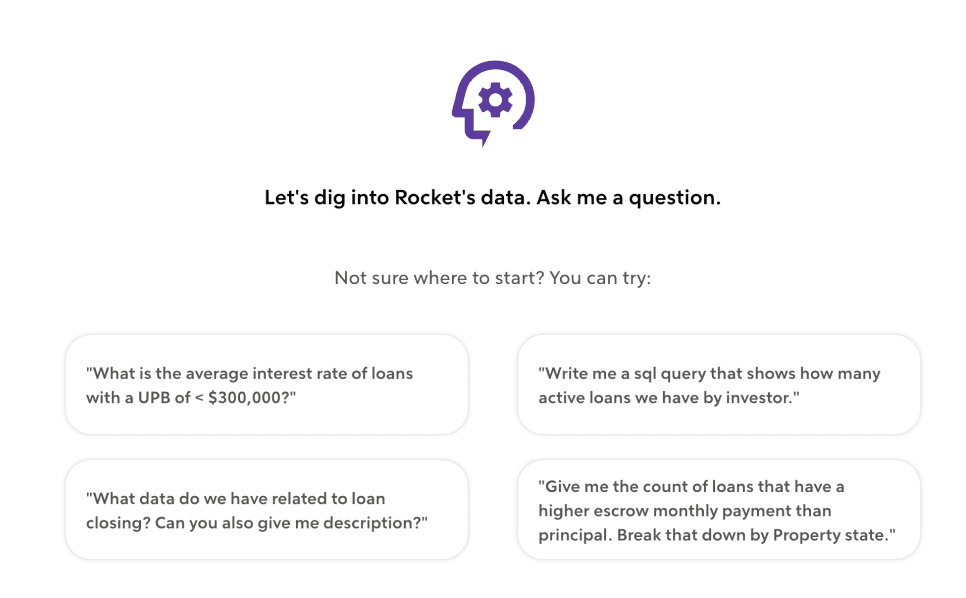
INITIAL CHAT UX
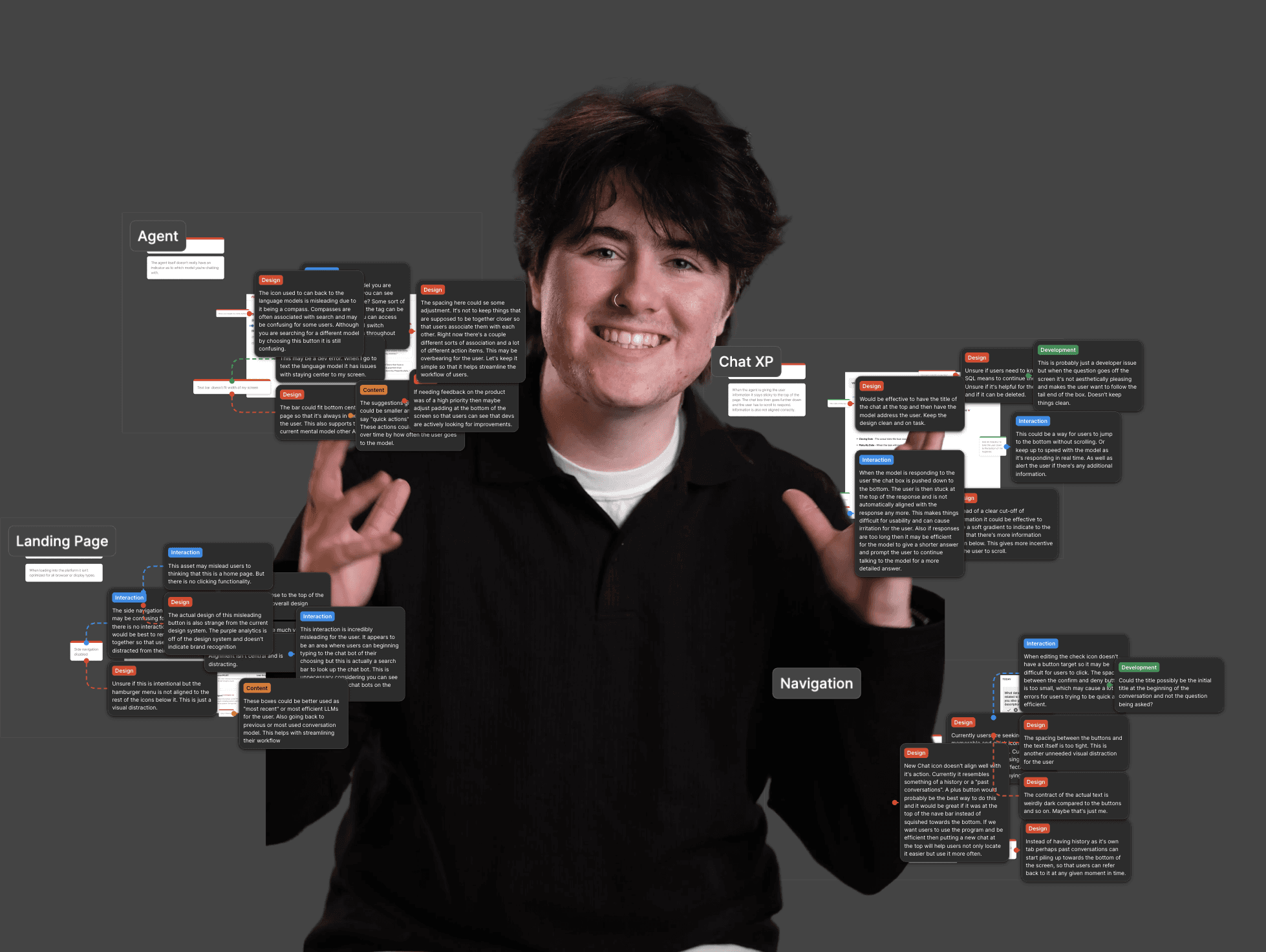
HEURISTIC ANALYSIS
The experience of getting to information is so disorienting that users would rather manually pull data.
THE CHALLENGE
Out of scope
Research resources were limited, I couldn't run formal usability studies with bankers in the field. I couldn't validate every design decision with structured testing. I couldn't guarantee that every edge case was accounted for before shipping.
Where I fit
Visual and interaction consistency to a product that had none. Align the experience with familiar AI patterns users already trusted. Make the tool feel intentional, trustworthy, and part of the Rocket ecosystem.
Heuristic Audit
Catalogued every visual inconsistency, interaction pattern, and mental model mismatch. Built a complete inventory of what was broken.
Align to Familiar Patterns
Studied ChatGPT, Gemini, Claude, and Copilot. Identified what users already expected from AI tools and began aligning Rocket Analytics to those patterns.
Ship, Iterate, Repeat
Weekly design critiques surfaced issues before they became problems. Each iteration got me closer to answering the deeper question: what does a well-designed AI experience actually feel like inside a large enterprise design system?
Build for scale
Extracted reusable patterns into the Composer component. Ensured every future AI tool at Rocket could inherit consistent, trustworthy patterns.
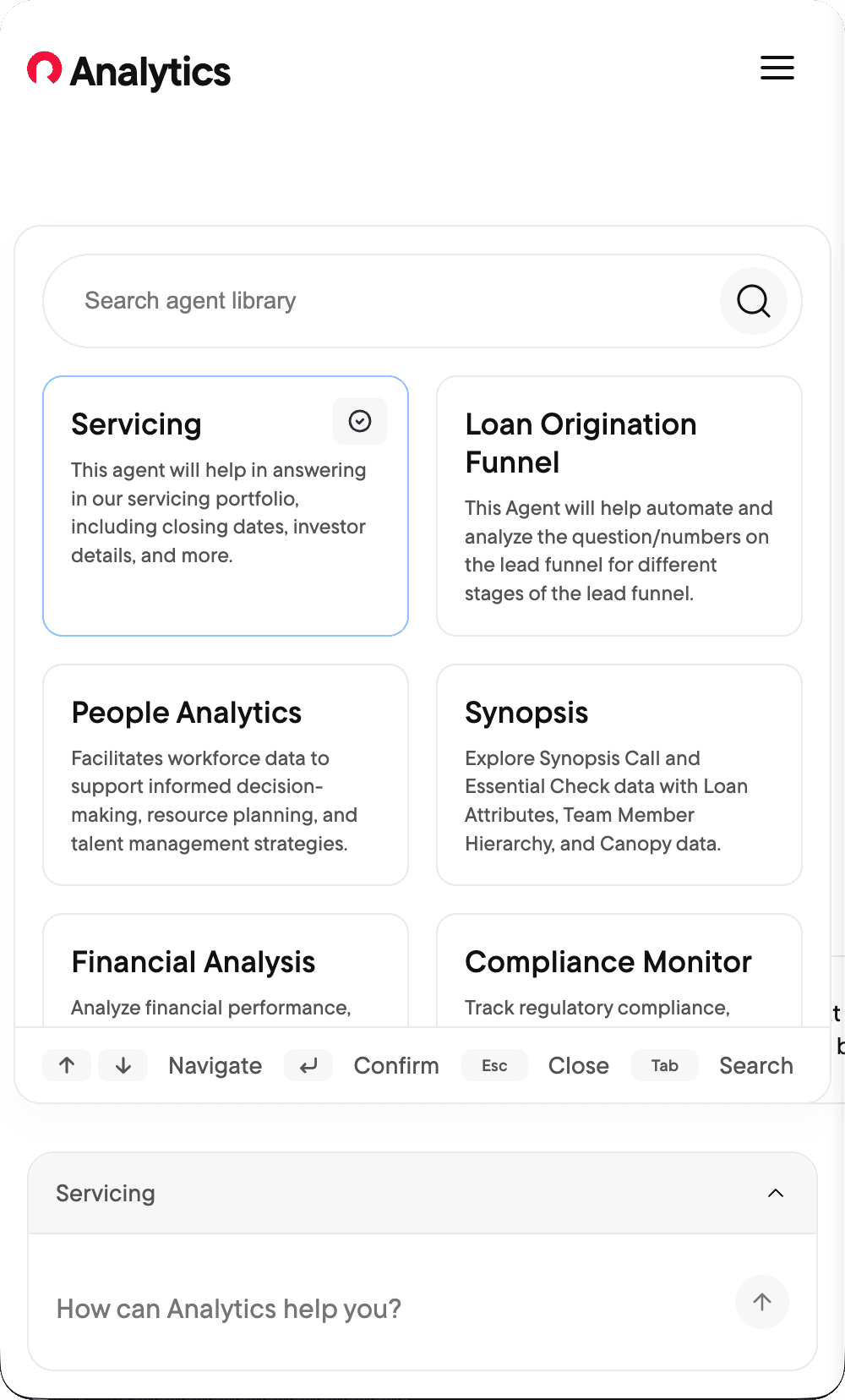
LANDING PAGE
A First Impression That Finally Makes Sense
"Users shouldn't have to guess what kind of input field they're typing into."
INITIAL LANDING PAGE
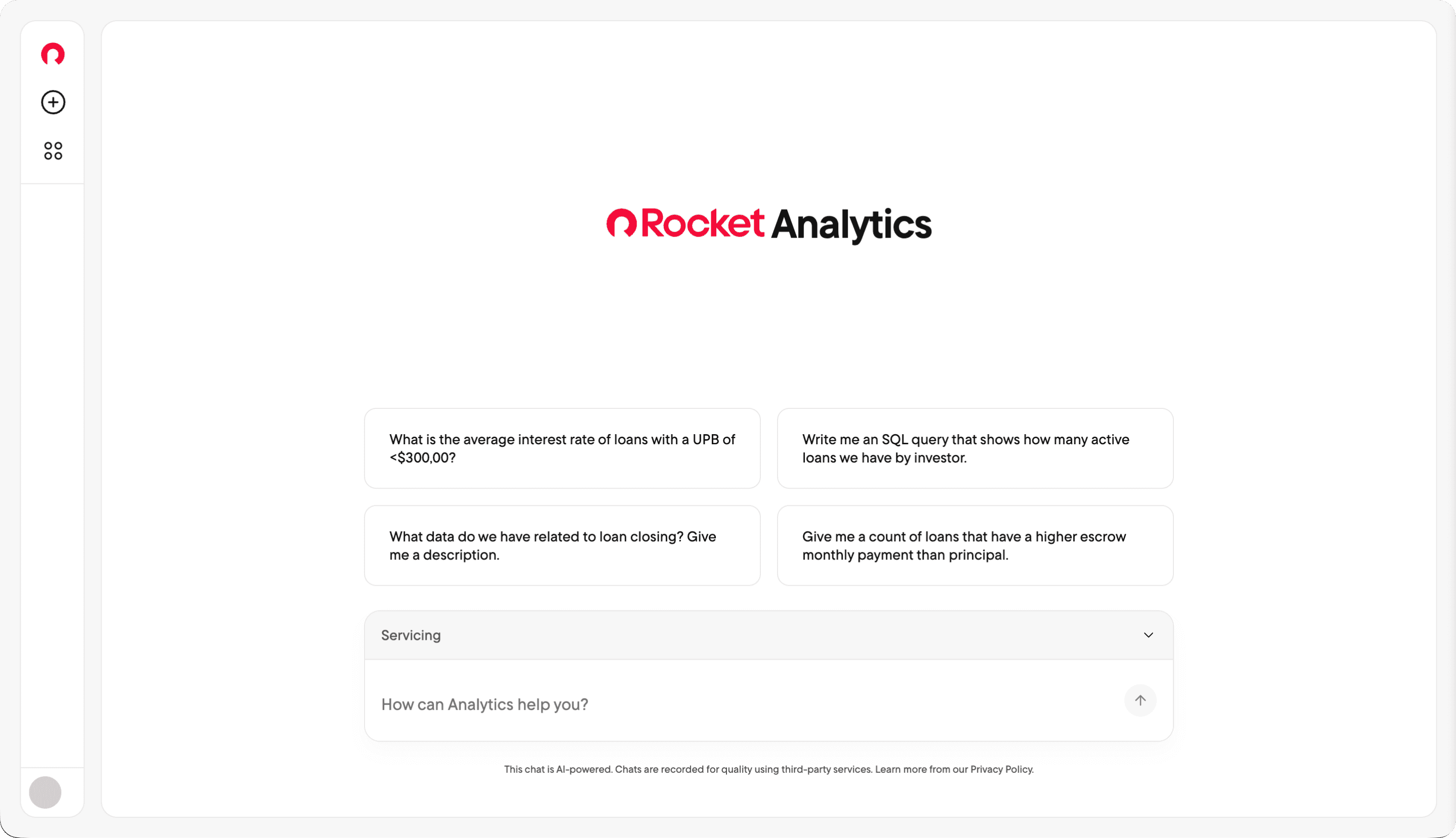
MY DESIGN
What does it do?
The landing page now separates "browse agents" from "start a chat" — two distinct actions that were previously indistinguishable. Users are met with a clear grid of available AI agents, each with a name, description, and visual icon. The chat input is where it should be: inside a conversation, not on the landing page.
Why it matters
Users no longer have to guess what kind of input field they're typing into. The landing page sets expectations before the conversation begins. It answers the question "what can I do here?" before users have to ask it.
NAVIGATION
A Sidebar That Actually Guides You
"Don't make users relearn navigation patterns."
BEFORE
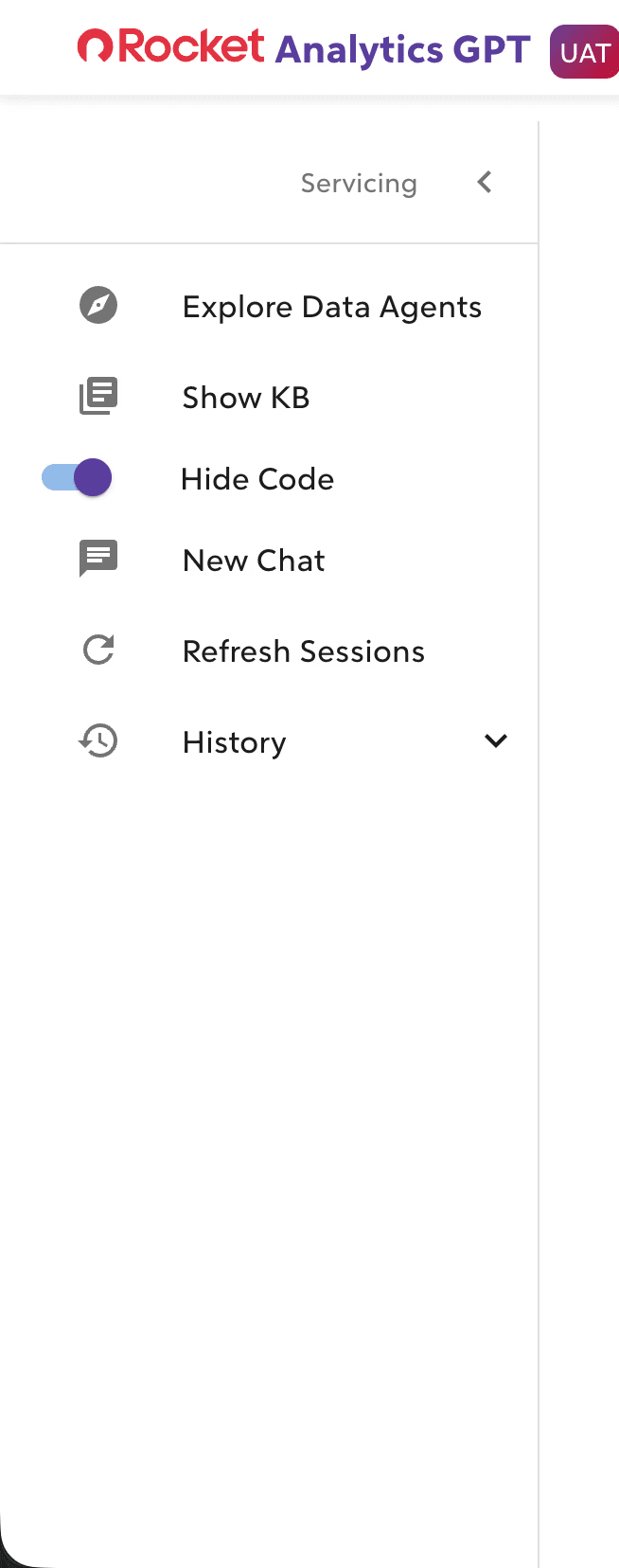
AFTER
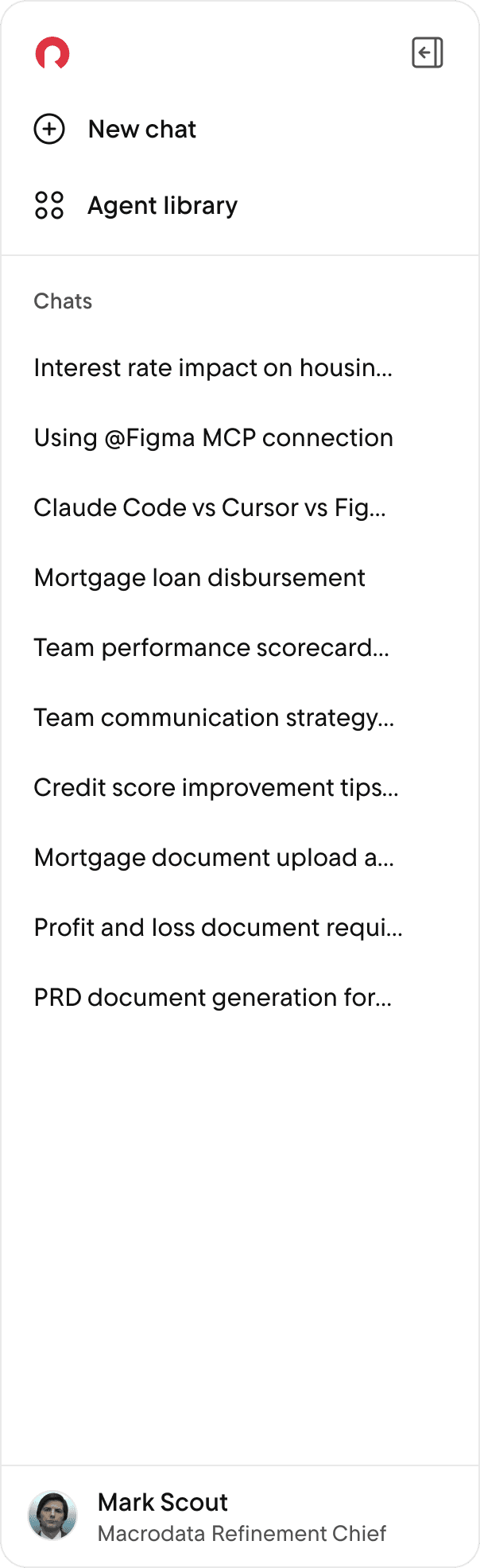
What does it do?
The sidebar now follows the mental model set by ChatGPT and other modern AI tools: a persistent list of past conversations, clearly labeled, with the ability to start a new chat prominently displayed. Agent switching is moved to a context-appropriate location within the conversation view.
Why it matters
Users don't have to relearn navigation patterns. The sidebar functions exactly how they'd expect it to — which means they can focus on their work instead of figuring out the interface.
CHAT EXPERIENCE
Keep Chatting Simple and Familiar
"Trust is built through familiarity."
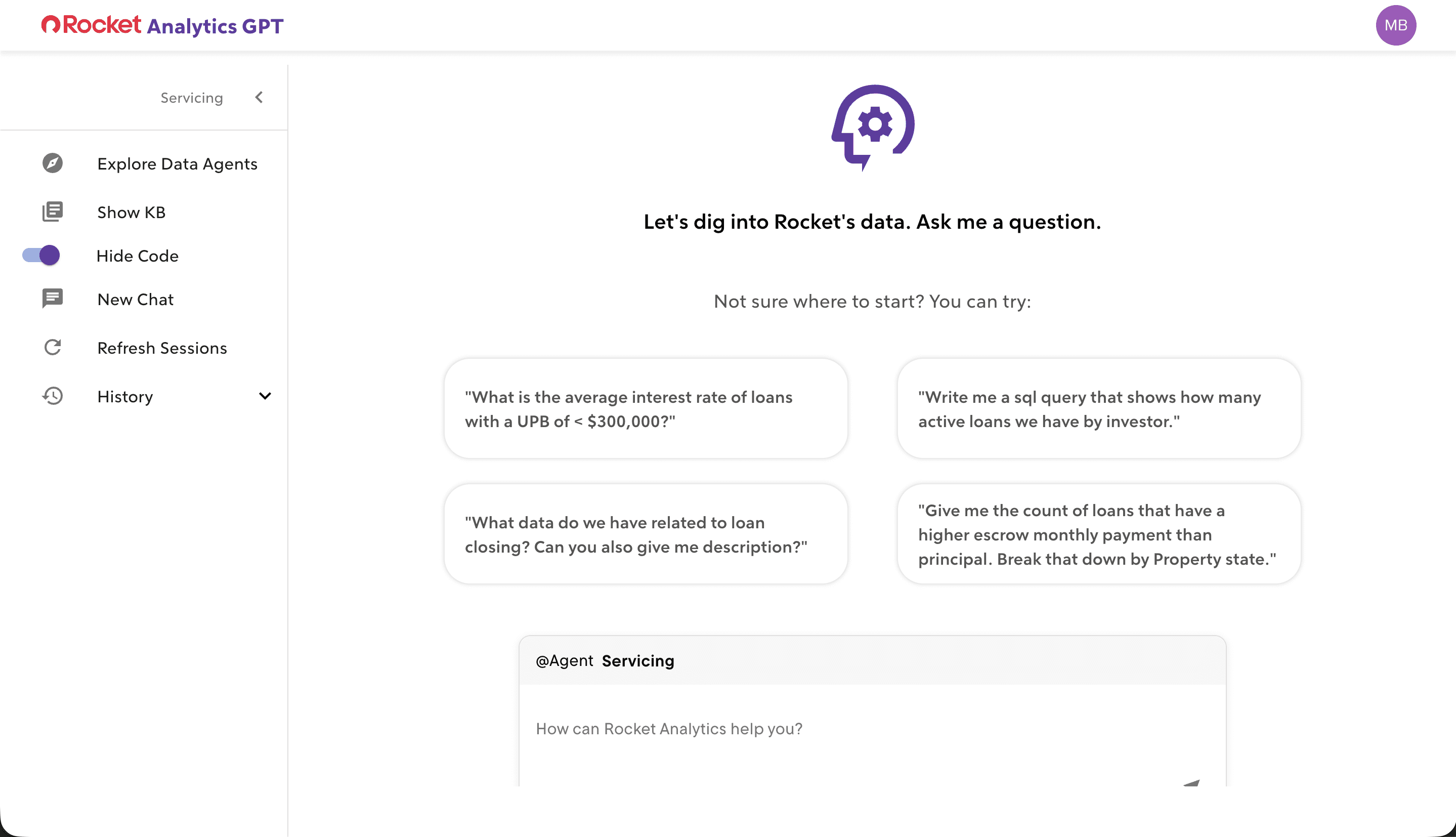
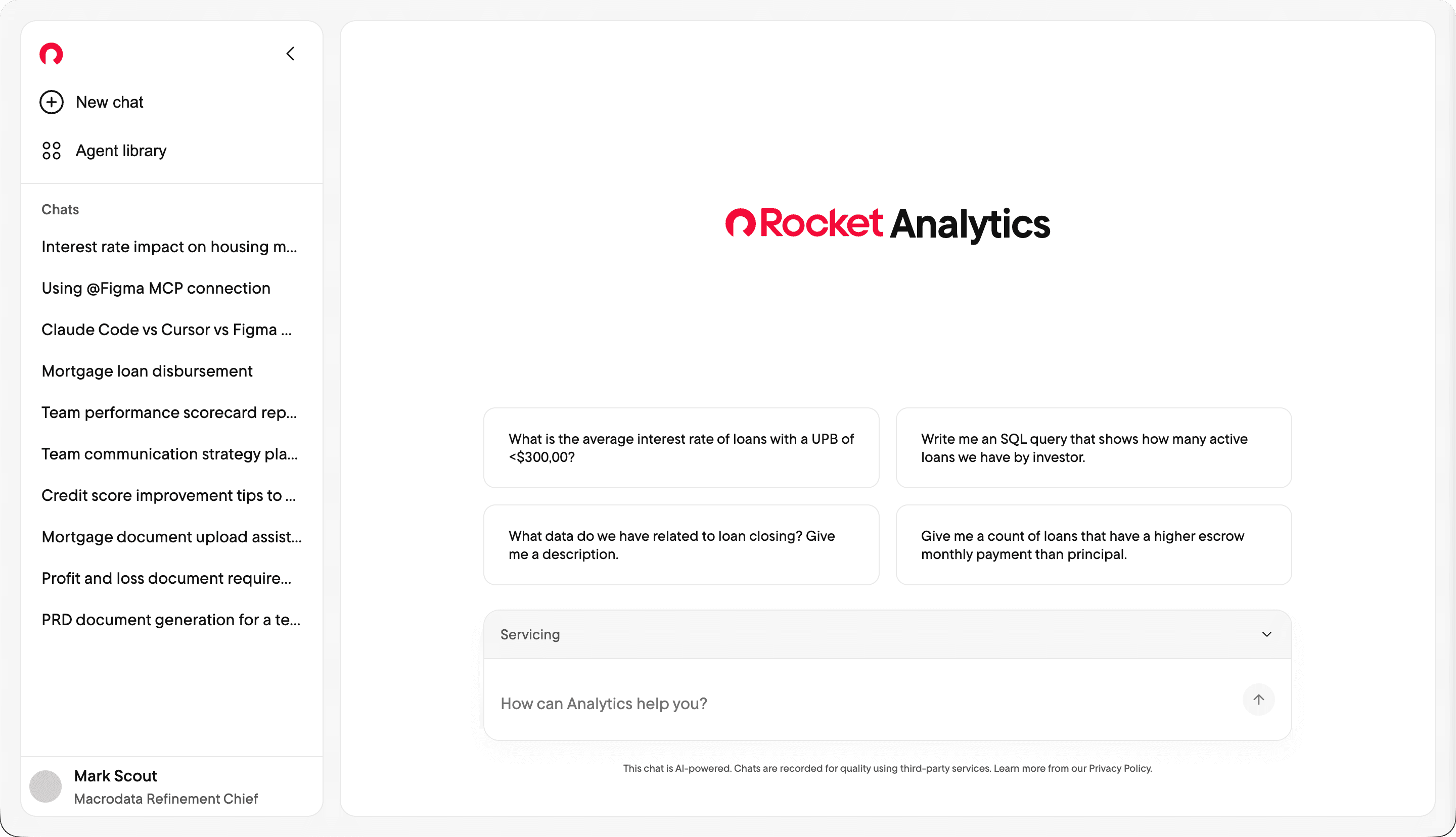
What does it do?
The chat interface now uses a clean, message-based layout with clear visual distinction between user input and AI responses. The typing indicator, message spacing, and interaction states all follow established conversational UI patterns from modern chat applications.
Why it matters
When the chat feels like every other chat interface users have internalized, there's no learning curve. Trust is built through familiarity. Users can focus on asking better questions instead of decoding the interface.
ANALYTIC EXPERIENCE
Give Users What They Need, Not Everything You Have
"Allow users ways to customize their analytic results so they get their ideal results without being overwhelmed."
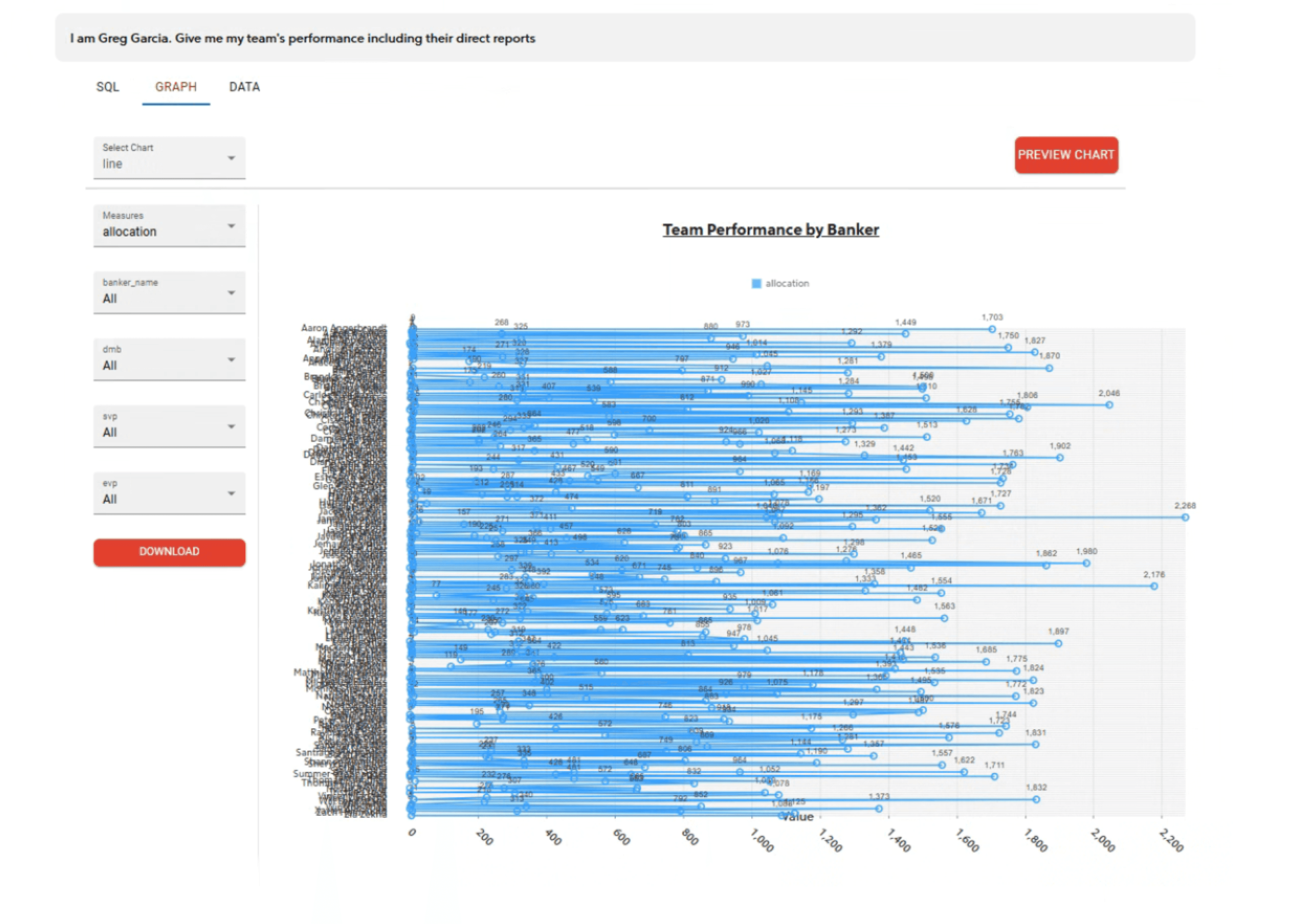
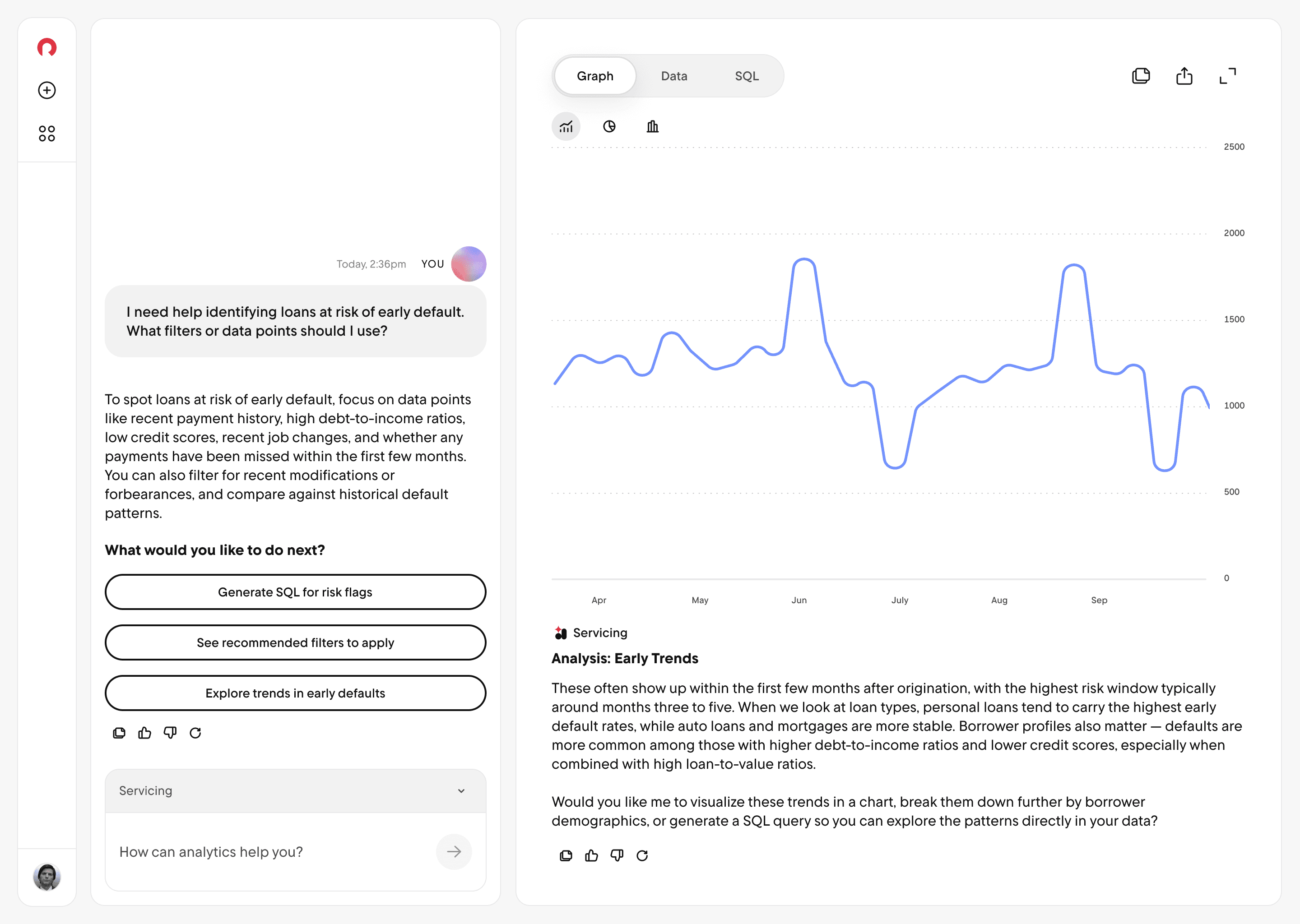
Want access to your data?
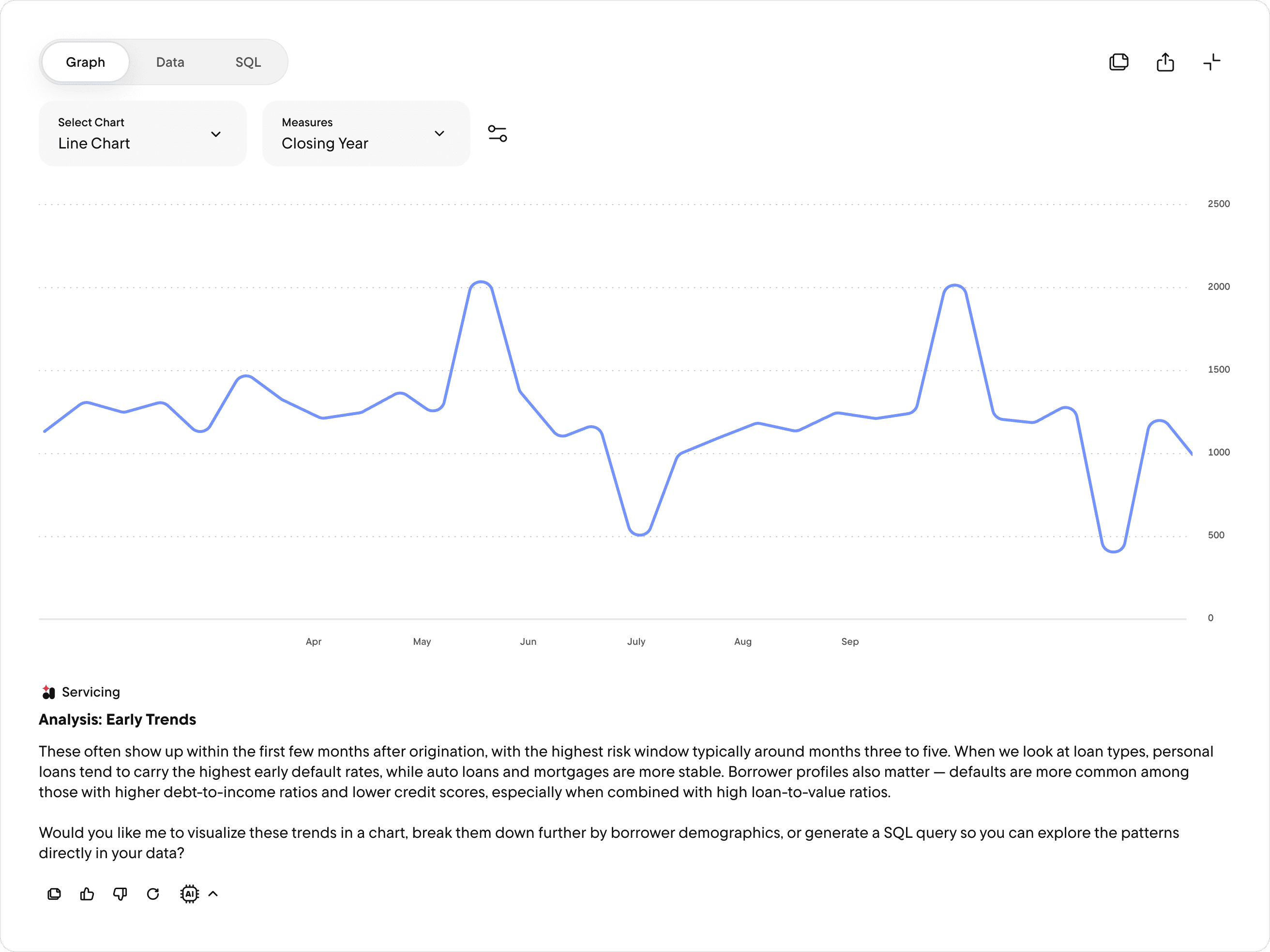
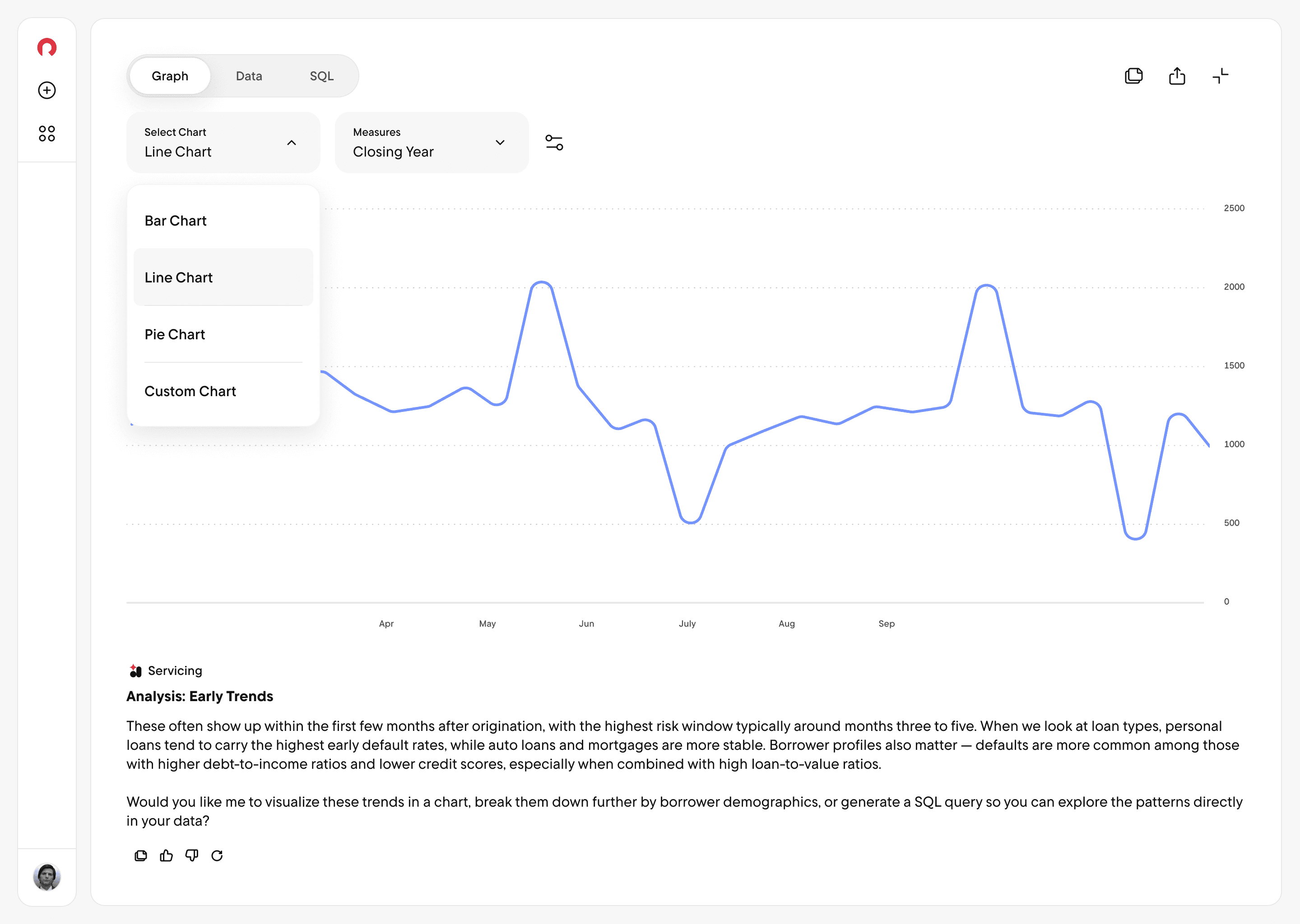
Enlarging the data charts for the users was a huge win. Allowing them to customize chart types, data, and more.
What does it do?
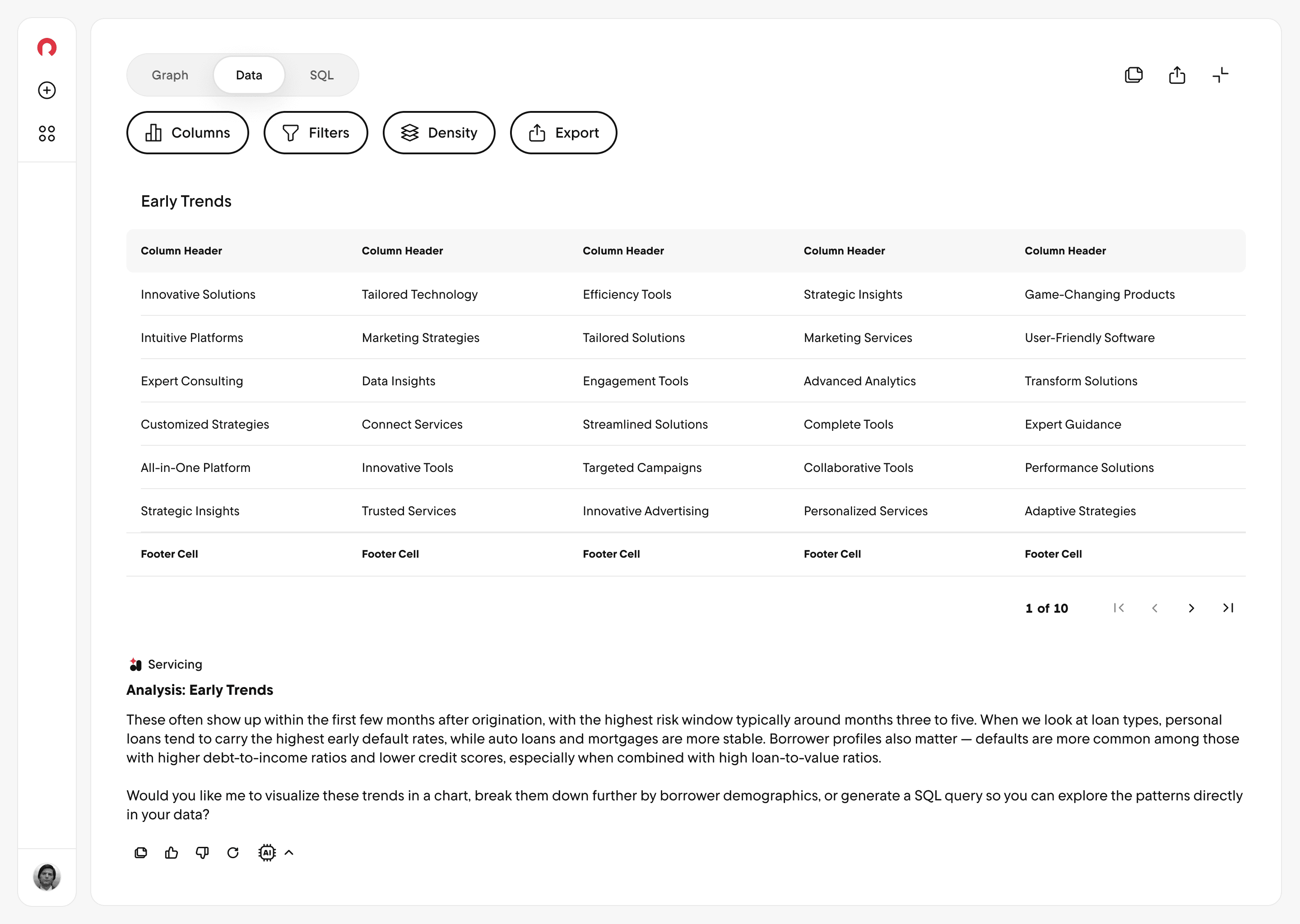
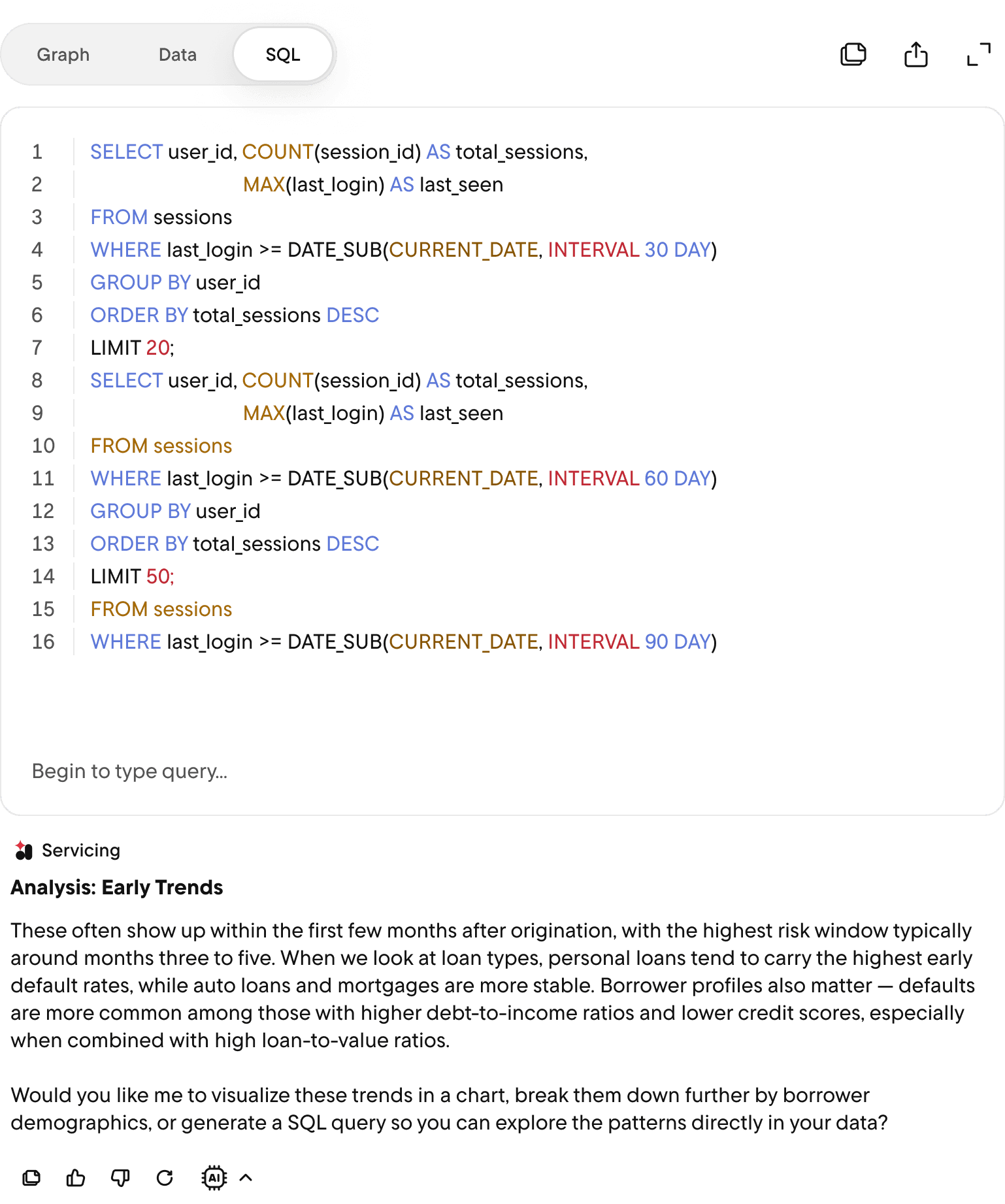
Restructured how Rocket Analytics surfaces SQL code, data tables, and graph visualizations — giving users clear control over which format they see and why each option exists.
Why it matters
Dumping three output types on a user at once doesn't feel powerful, it feels overwhelming. The redesign treats data output as a choice, not a flood — so bankers can get to their insight in the format that actually fits their workflow.
DESIGN SYSTEM
The Composer: Designing for the Whole Ecosystem
What started as a chat input for Rocket Analytics became infrastructure for every AI experience at Rocket Mortgage.
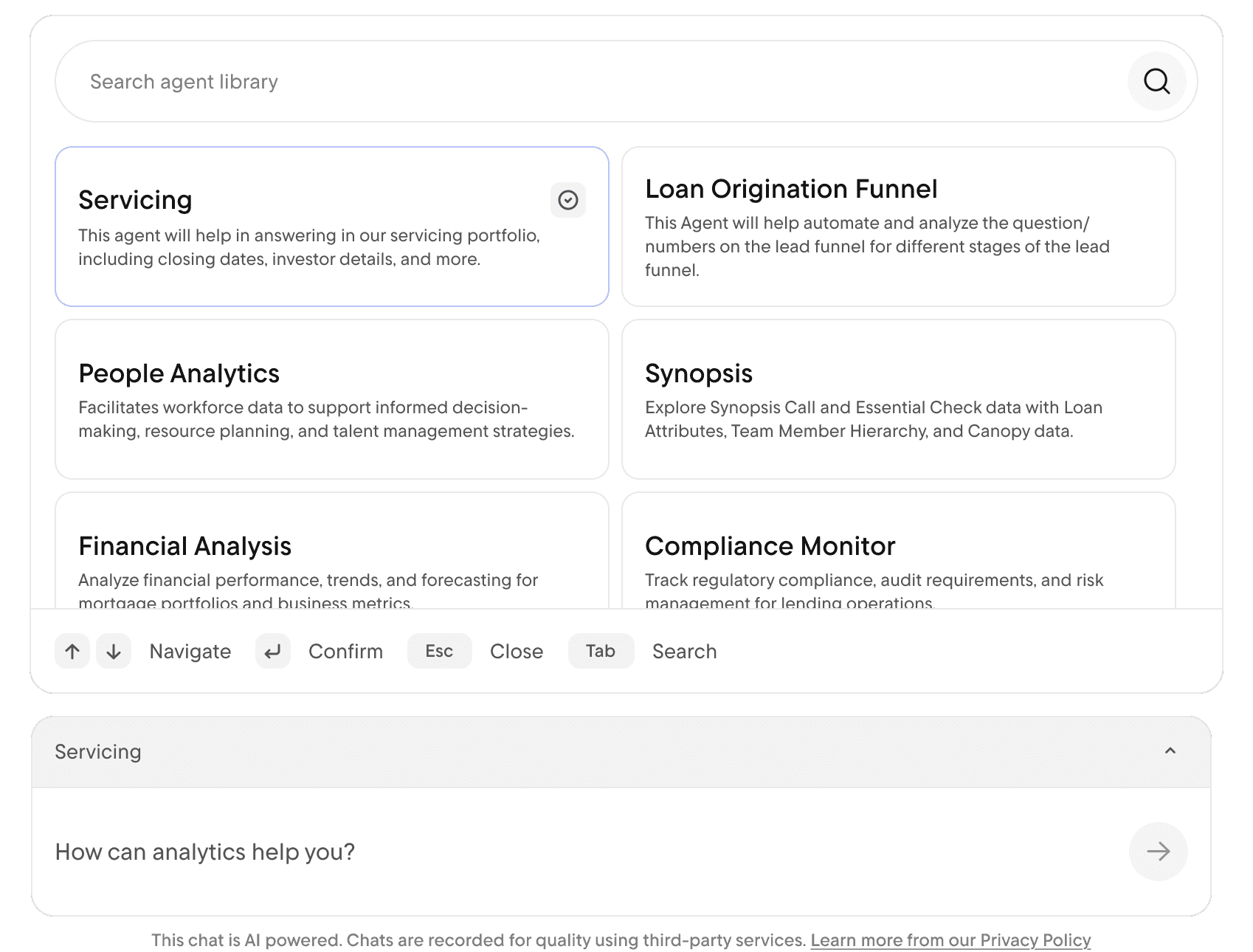
Consistent Behavior
Text input, file attachments, suggested prompts, and keyboard shortcuts work the same way across every AI tool.
Design System Integration
Built using Rocket's design tokens and components. Feels native to the ecosystem, not bolted on.
User Trust
When every AI experience feels cohesive, users know what to expect. Consistency builds trust at scale.
Reusable Infrastructure
Other teams adopted the Composer for their AI tools. Designers and engineers don't have to reinvent chat inputs.
Shipped
With V1 deployed to 700+ daily users there's still room for improvement. V2 is on is in design review with V3 on the way, rounding out designs for all of 2026!
Adopted
With my work on the Composer input field we're working on it becoming a standard component for conversational AI experiences across multiple teams at Rocket Mortgage.
User Satisfaction
The tool went from disorienting to dependable. Bankers who previously closed the tab started relying on it daily.
KIND WORDS
Don't just take it from me…
"This is not typical intern work, you've seriously made an impact here."
LEAD PRODUCT DESIGNER
"I didn't even know you were an intern."
SENIOR SOFTWARE ENGINEER
"The work Blake has done on this project is life changing for the users"
DIRECTOR OF PRODUCT DESIGN
"You should see the way the designs looked before Blake fixed it. Seriously, it's an incredible difference"
LEAD PRODUCT DESIGNER
"Without our amazing designer, Blake, none of this would be possible."
LEAD PRODUCT DESIGNER
REFLECTION
That's a wrap!
I inherited a hack-week project that hundreds of people depended on and nobody had designed. I learned what it means to ship work that's live, to make decisions without a safety net, and to earn trust not through a presentation — but through the product itself getting better, week after week.
What I'd do different is structure user research with the bankers directly. The design critique loop got me far, but I want to close the gap between what I'm observing secondhand and what users are actually experiencing in the moment. That's the next chapter.
MY FAVS